
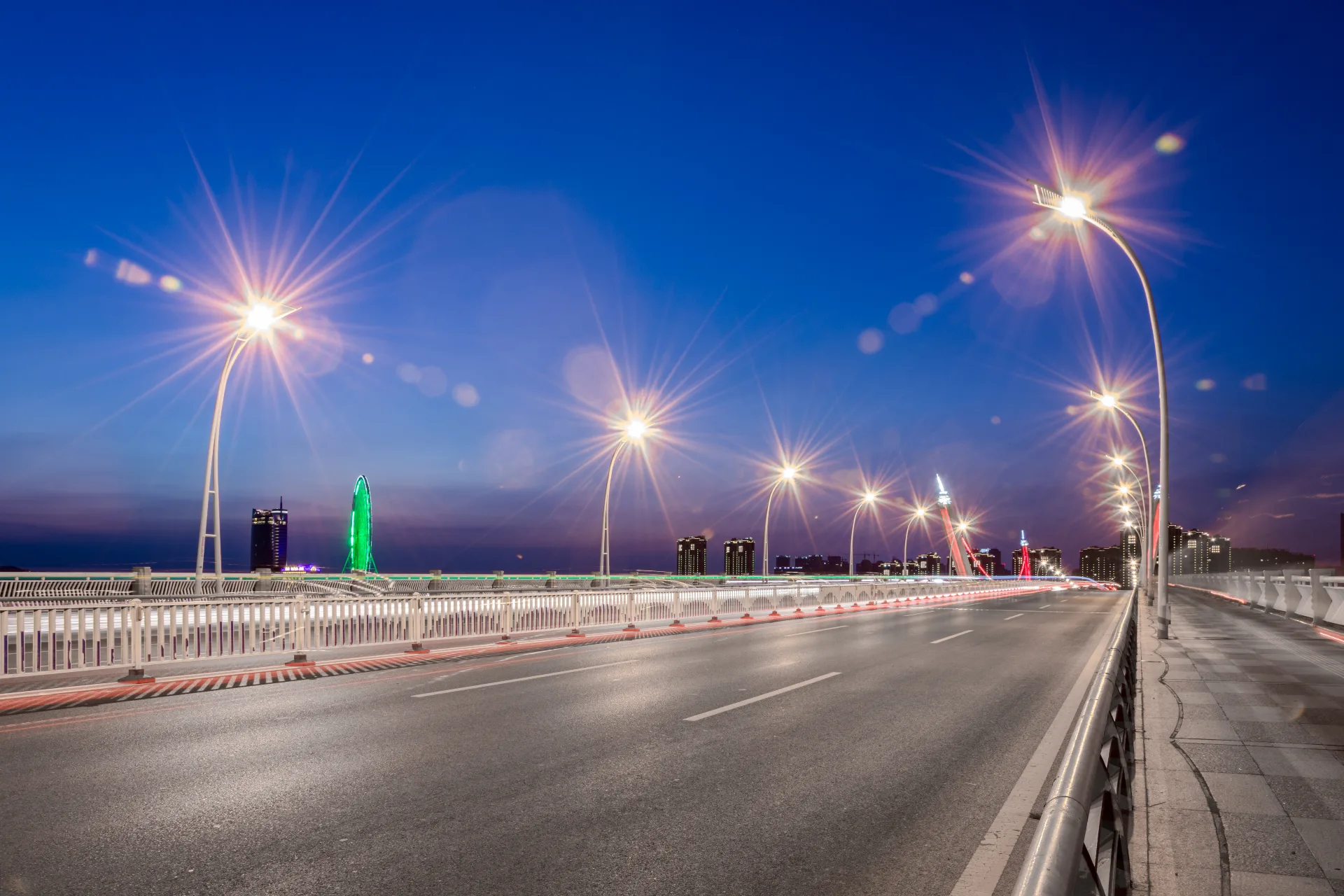
Street & Highway Lighting
Automates dimming and scheduling to reduce energy use and improve public‑area safety.

A smart, energy‑efficient lighting system that uses IoT, wireless control, and adaptive automation to optimize street and industrial lighting across cities and large facilities.
Overview
The Smart Lighting System is an intelligent IoT‑driven platform designed to modernize and optimize outdoor and industrial lighting infrastructure. Using wireless LPWAN technologies such as LoRaWAN and NB‑IoT, each lighting pole or fixture becomes remotely controllable, enabling real‑time dimming, scheduling, energy monitoring, and fault detection.
This transforms traditional lighting networks into adaptive, energy‑efficient systems that significantly reduce operational costs while improving visibility and safety in streets, highways, campuses, industrial zones, and public spaces.
The system integrates seamlessly with centralized lighting controllers and cloud platforms, allowing municipalities and facility operators to manage thousands of lights from a single dashboard. Automated brightness adjustment based on time, motion, or environmental conditions ensures optimal illumination with minimal energy waste. With remote diagnostics, predictive maintenance, and open API integration, the Smart Lighting System supports smart‑city initiatives, sustainability goals, and long‑term infrastructure resilience.
Where it’s deployed
Real-world environments where Smart Lighting delivers measurable operational value.
Automates dimming and scheduling to reduce energy use and improve public‑area safety.
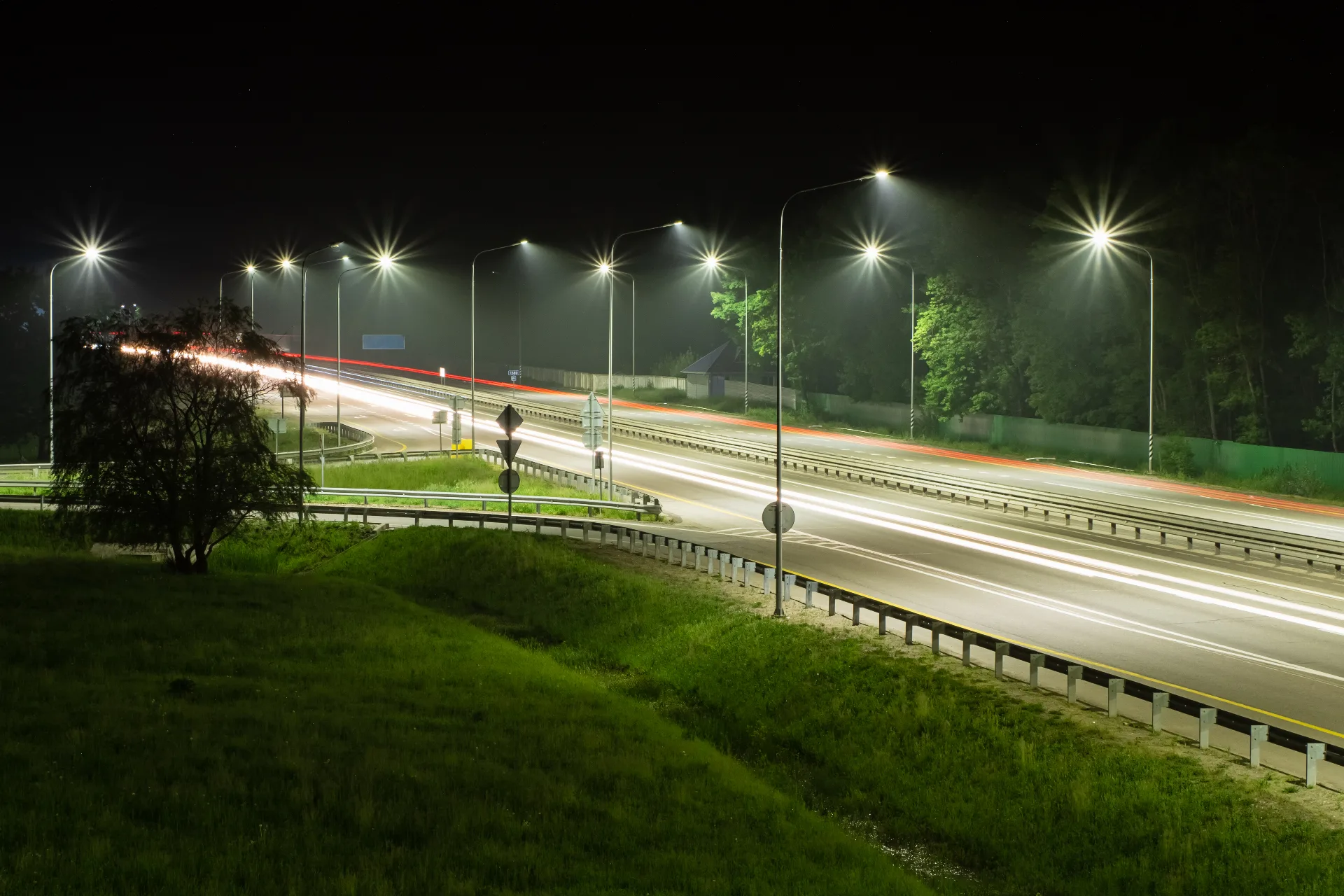
Adjusts brightness based on presence to enhance comfort while minimizing light pollution.
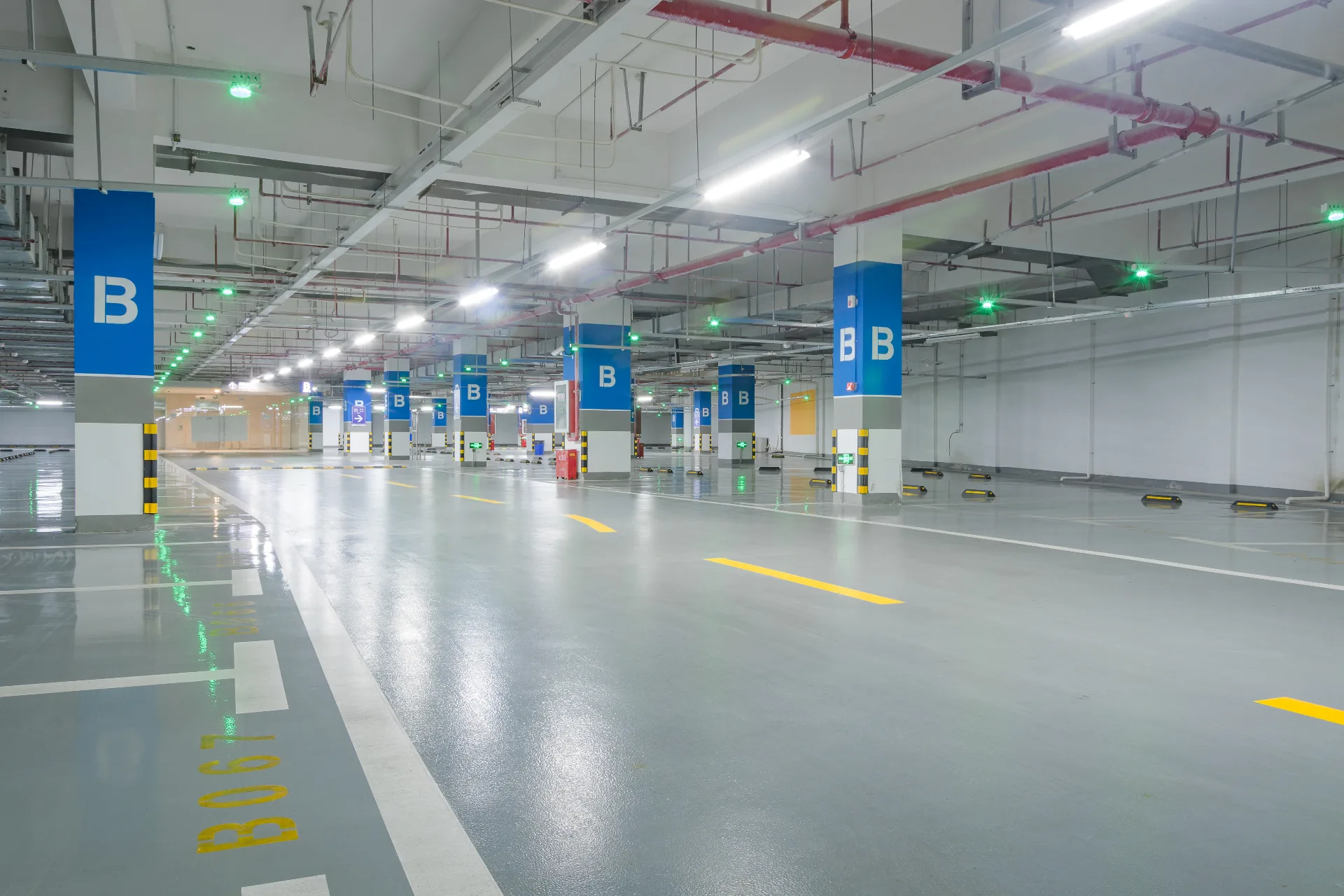
Enables centralized control for buildings and campuses to optimize energy and maintenance.

Provides sensor‑based illumination for warehouses and logistics yards to improve safety and visibility.
Solution architecture diagram
Each luminaire becomes an addressable asset. Dimming follows schedules and measured conditions, and a failed lamp reports itself instead of waiting for a night patrol or a public complaint.
On, off and dim level, burn hours and fault codes
Voltage, current, power factor and consumption per pole
Daylight level and presence for adaptive dimming
Controllers accept downlink commands as well as reporting uplinks, which allows scheduling, group dimming and remote switching from the platform.
Gateways mounted along the route cover long strings of poles. The network server manages device keys, downlink queueing and payload decoding for every controller.
Device management, secure ingestion, time series storage, rules and alerting, role based access and open interfaces for integration with the systems already in use.
Fault list per pole, so a visit carries the right replacement part.
Consumption per circuit and the effect of each dimming profile.
Service level, availability and energy reporting by district.
What it does
Engineered for real-world municipal and operator deployments — built to scale.
Turn lights on/off, dim, or schedule operations remotely through LoRaWAN/NB‑IoT for full network-wide control.
Automatically adjusts lighting levels based on time, occupancy, or environmental conditions to reduce energy consumption.
Instant notifications for lamp failures, power issues, or abnormal behavior to minimize downtime and maintenance costs.
Tracks power usage per pole or zone, enabling data‑driven decisions and measurable sustainability improvements.
Manage thousands of lighting nodes across cities or industrial campuses through a unified cloud dashboard.
Open APIs and IoT protocols allow integration with traffic systems, environmental sensors, and citywide automation frameworks.
Questions
Related reading: Smart City solutions, wireless technologies and smart cities industry page.
Smart City Specialist
Talk to our smart-city architects about pilots, integration, and operations.